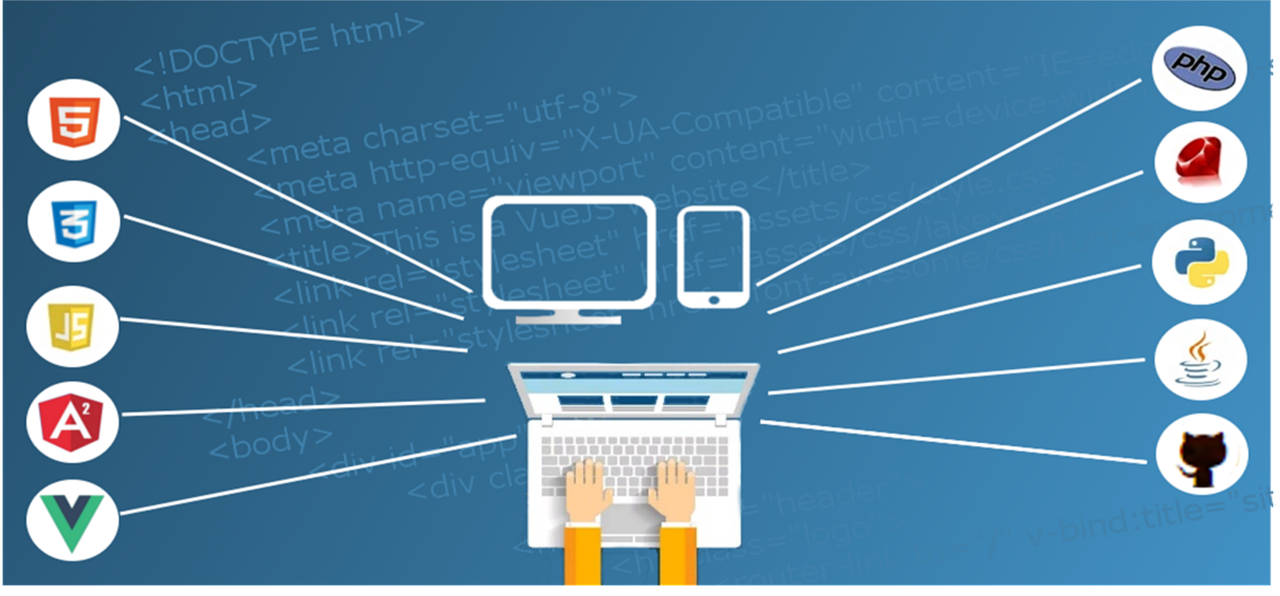
How Web Development Is Divided in Modern Engineering
When people say they are "learning web development", they could mean designing high-performance interactive interfaces, scaling distributed database clusters, writing server-side payment microservices, or building automated cloud deployment pipelines. Web development is not a single discipline; it is an umbrella encompassing distinct engineering specializations.
Understanding the differences between these domains is essential for beginners. It prevents you from getting overwhelmed by trying to learn twenty different technologies at once, and helps you focus on the exact skills needed for the specific role you want to pursue.
1. Frontend Engineering: The User Interface and Experience
Frontend developers build everything users see, touch, and interact with in their web browsers. Their responsibility goes far beyond styling text and centering buttons:
- Core Technology Stack: HTML5, CSS3, modern TypeScript, and component frameworks like Angular, React, or Vue.
- Reactivity and State: Managing dynamic client state, user sessions, form validation, and optimistic UI updates without reloading the browser.
- Browser Performance: Optimizing Core Web Vitals (Largest Contentful Paint, Cumulative Layout Shift, Interaction to Next Paint), lazy loading media assets, and minimizing parsed JavaScript bundle sizes.
- Accessibility (a11y): Ensuring applications are fully navigable by keyboard and screen readers adhering to WCAG standards.
2. Backend Engineering: Logic, Data, and Security
Backend developers build the hidden engine that powers applications. Whenever a user registers an account, processes a credit card payment, or queries an inventory record, backend systems handle the request securely:
- Core Technology Stack: Node.js, Python, Go, Java, or Rust paired with frameworks like Express, Fastify, Django, or Spring Boot.
- Databases: Designing relational schemas in PostgreSQL or MySQL, and managing unstructured caches in Redis.
- API Architecture: Designing clean RESTful endpoints or GraphQL schemas with strict schema validation using libraries like Zod.
- Security and Authentication: Password hashing, token management, session invalidation, and rate limiting to prevent denial-of-service attacks.
3. Full-Stack Engineering: The End-to-End Generalist
Full-stack developers bridge the gap between frontend interfaces and backend infrastructure. They understand how a user click in the browser translates into an HTTP request, how the server routes the payload, how the database commits the transaction, and how the response updates the client UI.
Full-stack engineers are prized at early-stage startups and product teams because they can take a feature from initial design to production deployment independently. However, the trade-off is breadth over depth: full-stack developers often specialize in one side while maintaining solid working competence in the other.
4. DevOps and Cloud Infrastructure Engineering
Writing application code is only half the battle; keeping software running reliably under heavy traffic is where DevOps engineers excel:
- Containerization: Packaging code and dependencies into standardized Docker images.
- CI/CD Pipelines: Automating tests, linting, and deployments using GitHub Actions, GitLab CI, or CircleCI.
- Cloud Platforms: Provisioning and monitoring cloud resources on AWS, Google Cloud, Azure, or modern edge platforms like Cloudflare and Vercel.
- Observability: Setting up real-time error logging, metric dashboards, and alert monitors with tools like Datadog, Grafana, or Sentry.
5. AI Systems and Integration Engineering
A fast-growing specialization in web development focuses on integrating large language models and autonomous agents into web applications:
- RAG Pipelines: Chunking proprietary documents, generating vector embeddings, and running hybrid searches against vector databases.
- Tool Execution: Wiring LLM function calls directly into backend database queries and external APIs.
- Token Streaming: Handling low-latency Server-Sent Events (SSE) to stream generated tokens directly to frontend user interfaces.
How to Pick Your Starting Path
If you enjoy visual feedback, design fidelity, and user interaction, start with Frontend Development. If you enjoy data modeling, system logic, API contracts, and security algorithms, start with Backend Development.
Do not try to master everything simultaneously. Pick one side of the stack, build two complete production projects with it, and expand your skills outward as your practical understanding deepens.